
Your air conditioner is one of the hardest-working machines in your home, especially in Burleson, where it may run almost nonstop from May through September. So it is natural to wonder how many summers you can count on before it needs to be replaced. The answer depends on more than just the age printed on the data plate.
Here is what to expect from a typical AC system, the factors that shorten or extend its life, and how to tell when it is time to start planning for a replacement.
The Average Lifespan of an AC System
Nationally, a central air conditioner typically lasts about 15 to 20 years. In North Texas, where long, hot summers mean far more running hours each year, many systems land closer to 12 to 15 years. A well-maintained unit can reach the upper end of that range, while a neglected one may struggle after only 10.
| System Type | Typical Lifespan | Notes for North Texas |
|---|---|---|
| Central air conditioner | 12 to 20 years | Heavy summer use often puts it near 12 to 15 |
| Heat pump | 10 to 15 years | Runs year-round for heating and cooling |
| Ductless mini-split | 15 to 20 years | Inverter compressors run at lower, steadier speeds |
| Window or portable unit | 8 to 10 years | Best for single rooms, not whole homes |
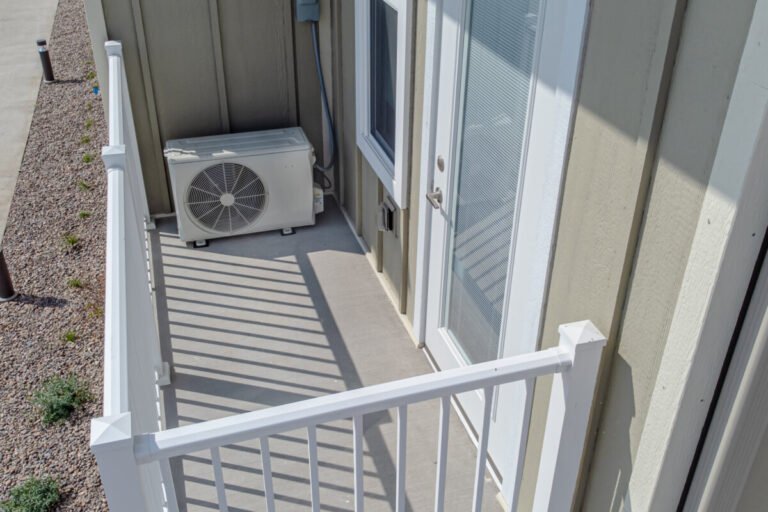
Not sure how old your system is? Look at the data plate on the outdoor unit. The manufacture date is often listed directly or coded into the serial number. While you are there, you can also check its size. Our guide on how to find the tonnage of your AC unit walks you through reading that label.
What Affects How Long Your AC Lasts
1. Regular Maintenance
Maintenance is the single biggest factor you control. Dirty coils, low refrigerant, worn capacitors and clogged drains all make the system work harder. A yearly tune-up catches these problems early and keeps the compressor, the most expensive part of the system, from overheating and failing prematurely.
2. Proper Sizing and Installation
An oversized AC cools the house quickly and shuts off before removing humidity, then turns back on again. That constant short cycling wears out parts faster. An undersized unit runs nonstop on hot afternoons and never gets a break. Poor installation, such as an incorrect refrigerant charge or undersized ductwork, can take years off even a high-quality system.
3. Climate and Workload
Texas heat is hard on air conditioners. A system that runs 2,000 or more hours a year will naturally wear out sooner than one in a mild climate. Shade over the outdoor unit, good attic insulation and a reasonable thermostat setting all reduce that workload.
4. Airflow
Restricted airflow strains every part of the system. Dirty filters, blocked vents, leaky ducts and an outdoor unit crowded by shrubs all shorten equipment life. Our article on air conditioner ventilation and maintenance explains how to keep air moving freely.
5. Equipment Quality and Refrigerant Type
Higher-quality components and modern variable-speed systems tend to last longer because they run more gently. Refrigerant matters too. Production and import of R-22, the refrigerant used in many systems installed before 2010, ended in 2020. Older R-22 systems are still allowed to run, but repairs that require adding refrigerant have become more difficult and less practical.
Signs Your AC Is Nearing the End
- It is more than 12 to 15 years old. Age alone is not a reason to replace, but it is a reason to start planning.
- Repairs are becoming frequent. If you are calling for service every summer, the breakdowns are likely to continue.
- Energy bills keep rising. Older systems lose efficiency as parts wear, so the same comfort costs more each year.
- Rooms do not stay comfortable. Uneven temperatures and lingering humidity can mean the system can no longer keep up.
- It uses R-22 refrigerant. A refrigerant leak in an R-22 system often tips the decision toward replacement.
- Strange noises or smells. Grinding, rattling or burning odors can point to a failing compressor or motor.
Some of these symptoms can also come from simpler problems. Before assuming the worst, review the common reasons an air conditioner stops working, since a tripped breaker or dirty filter is far easier to fix than a worn-out compressor.
Repair or Replace?
There is no one-size-fits-all answer, but a few guidelines help:
- If your system is under 10 years old and the problem is a single part such as a capacitor, contactor or fan motor, repair usually makes sense.
- If the system is 12 years or older and needs a major repair, such as a compressor or a coil replacement, it is often wiser to put that money toward a new, more efficient system.
- A common rule of thumb is that if a repair would cost more than half the value of a new system, replacement is usually the better long-term choice.
Planning ahead also helps. Replacing an aging system in spring or fall lets you choose the right equipment calmly, instead of making a rushed decision during a July heat wave.
How to Help Your AC Last Longer
- Change the air filter every one to three months, more often with pets or allergies.
- Schedule a professional tune-up every spring before the heat arrives.
- Keep at least two feet of clear space around the outdoor unit.
- Avoid setting the thermostat extremely low on hot afternoons.
- Have refrigerant leaks repaired properly rather than simply recharged.
- Seal leaky ducts and improve attic insulation to reduce runtime.
Thinking About Your AC’s Future?
Whether your system is approaching its teens or you simply want to know how much life it has left, our licensed technicians can inspect it and give you honest advice on repairing or replacing it. When the time comes, our team handles AC installation and replacement in Burleson with properly sized, efficient systems. Call (817) 839-0304 to schedule a visit.