
A heat pump can keep your home cool through a 100-degree Burleson summer and warm on a frosty January morning, all with one outdoor unit and no flame. That sounds almost too good to be true, so it is no surprise that homeowners often ask us the same question: how does a heat pump actually work?
The short answer is that a heat pump does not create heat. It moves heat from one place to another. Here is a plain-English look at how that happens, why it is so efficient, and what you should know if your home has one or you are thinking about switching.
The Basic Idea: Moving Heat Instead of Making It
A furnace burns gas or runs electric heating elements to create warmth. A heat pump works more like your refrigerator. Your fridge pulls heat out of the food compartment and releases it through the coils on the back. A heat pump does the same thing on a larger scale, moving heat between the inside and outside of your house.
- In summer, it pulls heat out of your home and releases it outdoors, exactly like a central air conditioner.
- In winter, it reverses direction, pulling heat from the outdoor air and releasing it inside.
Even when it feels cold outside, the air still holds a surprising amount of heat energy. Modern heat pumps can capture that energy at temperatures well below freezing.
The Main Parts of a Heat Pump
- Outdoor unit: contains the compressor, a coil and a large fan.
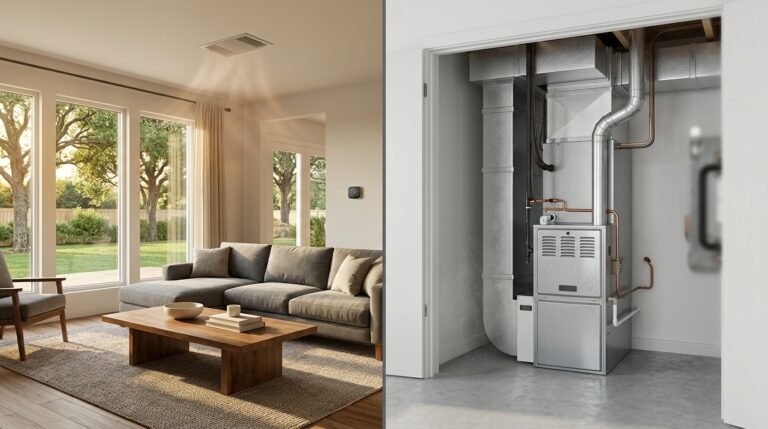
- Indoor unit: usually an air handler with a coil and a blower that pushes air through your ducts. If you are not sure how this differs from a furnace, our guide on air handlers vs. furnaces breaks it down.
- Refrigerant: a special fluid that absorbs and releases heat as it changes between liquid and gas.
- Compressor: the heart of the system, which pressurizes the refrigerant and keeps it moving.
- Expansion valve: lowers the refrigerant’s pressure so it becomes cold enough to absorb heat again.
- Reversing valve: the part that makes a heat pump different from an AC. It switches the direction refrigerant flows, which flips the system between cooling and heating.
How a Heat Pump Heats Your Home, Step by Step
- Absorbing heat outside. Cold, low-pressure liquid refrigerant flows through the outdoor coil. Because it is colder than the outdoor air, it absorbs heat and turns into a gas.
- Compressing the gas. The compressor squeezes that gas, which raises its pressure and temperature sharply, often well above 100 degrees.
- Releasing heat inside. The hot gas travels to the indoor coil. Your blower pushes room air across the coil, the air picks up the heat, and warm air flows out of your vents.
- Starting over. As it gives up its heat, the refrigerant cools back into a liquid. It passes through the expansion valve, drops in pressure and temperature, and heads outside to collect more heat.
In cooling mode, the reversing valve sends refrigerant the opposite way. The indoor coil absorbs heat from your home and the outdoor unit releases it, just like a standard air conditioner.
| Part | Heating Mode | Cooling Mode |
|---|---|---|
| Outdoor coil | Absorbs heat from outdoor air | Releases heat outdoors |
| Indoor coil | Releases heat into your home | Absorbs heat from your home |
| Reversing valve | Sends hot gas indoors | Sends hot gas outdoors |
| Air from vents | Warm | Cool and dehumidified |
Why Heat Pumps Are So Efficient
Because a heat pump moves heat instead of creating it, it can deliver more heating energy than the electricity it uses. Under the right conditions, a heat pump can provide two to three times more heat than the energy it consumes. The U.S. Department of Energy notes that today’s heat pumps can reduce electricity use for heating by about 50 percent compared with electric resistance heating such as electric furnaces and baseboard heaters.
When comparing systems, look for two ratings. SEER2 measures cooling efficiency, and HSPF2 measures heating efficiency. Higher numbers mean lower operating costs over the life of the system.
Normal Heat Pump Behavior That Surprises People
Defrost Mode
On cold, damp days, frost can build up on the outdoor coil. The system handles this automatically by switching briefly into cooling mode to warm the coil. You may see steam rising from the outdoor unit, hear a whoosh as the valve shifts, or feel cooler air from the vents for a few minutes. This is normal and usually lasts only a short time.
Air That Feels Warm, Not Hot
A gas furnace blows very hot air in short bursts. A heat pump delivers steadier, gentler warmth over longer run times. The air may feel cooler to your hand at the vent, but it keeps rooms at a more even temperature.
Auxiliary and Emergency Heat
As temperatures drop well below freezing, a heat pump’s capacity falls. Most systems have backup electric heat strips, often shown as “AUX” on your thermostat, to fill the gap. Large temperature setbacks can trigger these strips unnecessarily, so modest, steady settings work best. Our guide on how to best schedule your home’s thermostat includes tips for heat pump homes.
Is a Heat Pump a Good Fit for Burleson?
For most homes in our area, yes. North Texas has long, hot summers and relatively mild winters, which is the climate where heat pumps shine. The system handles the cooling season like any central AC, then covers the majority of winter days efficiently on its own. For the rare hard freeze, backup heat strips or a dual-fuel setup that pairs the heat pump with a gas furnace keeps the house warm.
Keeping Your Heat Pump Running Well
Because a heat pump works year-round, it puts in more hours than an AC or furnace alone. That makes regular care especially important.
- Change or check the air filter every one to three months.
- Keep at least two feet of clear space around the outdoor unit, and never cover it in winter.
- Clear leaves, grass clippings and snow away from the coil.
- Schedule professional service twice a year, once before summer and once before winter.
- Call a technician if the unit stays iced over, runs constantly in mild weather or blows cool air for long periods.
If your heat won’t come on at all, our article on why your heater won’t turn on covers the most common causes and safe checks.
Heat Pump Help From a Local Team
Whether you need a repair, seasonal maintenance or advice on a new system, our licensed technicians know heat pumps inside and out. Learn more about our heat pump repair and installation services in Burleson, or call (817) 839-0304 to schedule a visit.