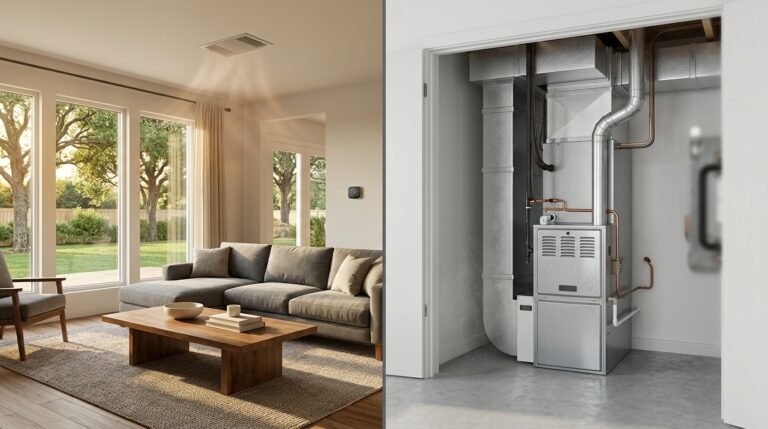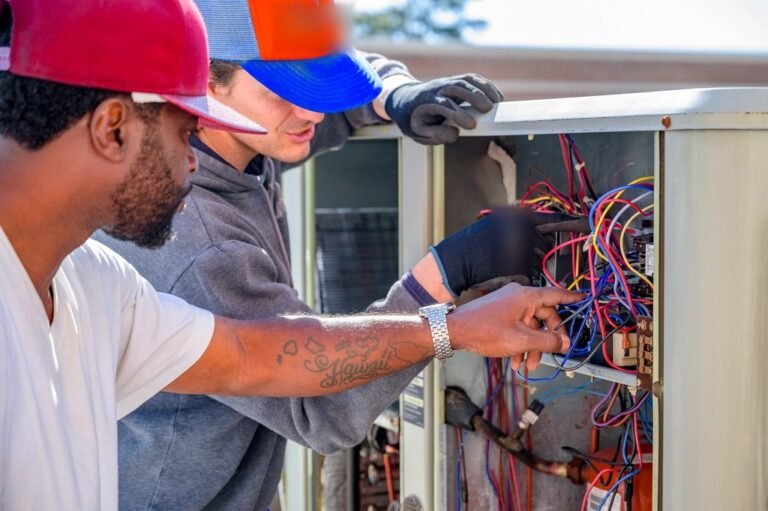
Whether you are shopping for a replacement system, comparing repair quotes or just curious, knowing your air conditioner’s size is useful. In the HVAC world, size is measured in tons, and you can usually find it in about five minutes without any tools. If you are also trying to understand the rest of your system, our guide to air handlers vs furnaces explains the indoor half of the equipment.
What Does AC Tonnage Mean?
AC tonnage has nothing to do with weight. It describes how much heat an air conditioner can remove from your home in one hour. One ton of cooling equals 12,000 BTUs per hour, a measurement that dates back to the days when homes were cooled with blocks of ice. Most homes in Burleson have systems between 1.5 and 5 tons.
- 1.5 tons = 18,000 BTU
- 2 tons = 24,000 BTU
- 2.5 tons = 30,000 BTU
- 3 tons = 36,000 BTU
- 3.5 tons = 42,000 BTU
- 4 tons = 48,000 BTU
- 5 tons = 60,000 BTU
Step 1: Find the Data Plate on the Outdoor Unit
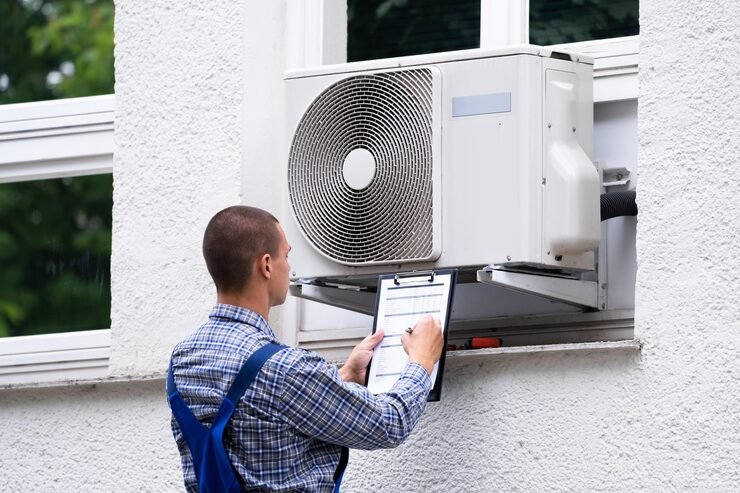
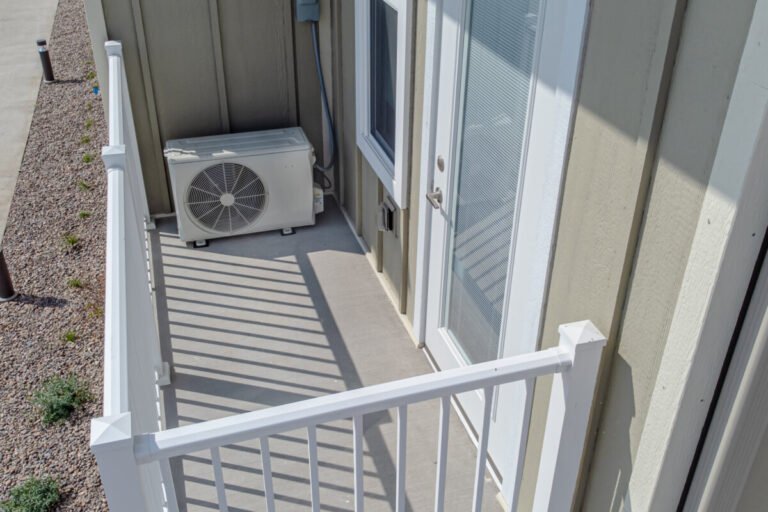
Walk outside to the condenser, the large unit with the fan on top. Look for a metal or sticker label called the data plate or nameplate, usually on the side or back panel near the electrical connections. It lists the brand, model number, serial number and electrical ratings.
For safety, do not remove any panels. If the label is faded, snap a photo with your phone and zoom in. Clean dust away with a dry cloth rather than water.
Step 2: Decode the Model Number
Manufacturers hide the size inside the model number. Look for a two-digit number that is divisible by 6, usually 18, 24, 30, 36, 42, 48 or 60. That number is the cooling capacity in thousands of BTUs. Divide it by 12 to get tons.
Examples:
- A model number containing 24, such as XX24XXXX, means 24,000 BTU, or 2 tons.
- A model number containing 36 means 36,000 BTU, or 3 tons.
- A model number containing 60 means 60,000 BTU, or 5 tons.
Watch out for other numbers. Some model numbers also include efficiency ratings such as 14 or 16, or series codes. The tonnage number is almost always one of the divisible-by-6 values listed above, and it often appears in the middle of the model number.
Step 3: Use These Backup Methods
If the data plate is missing or unreadable, try these options:
- Check your paperwork. Installation invoices, warranty registrations and home inspection reports usually list the size.
- Look up the serial number. Most manufacturers can confirm the model and size by phone or on their website.
- Check the indoor unit. The indoor coil, air handler or furnace label sometimes lists the matching cooling size.
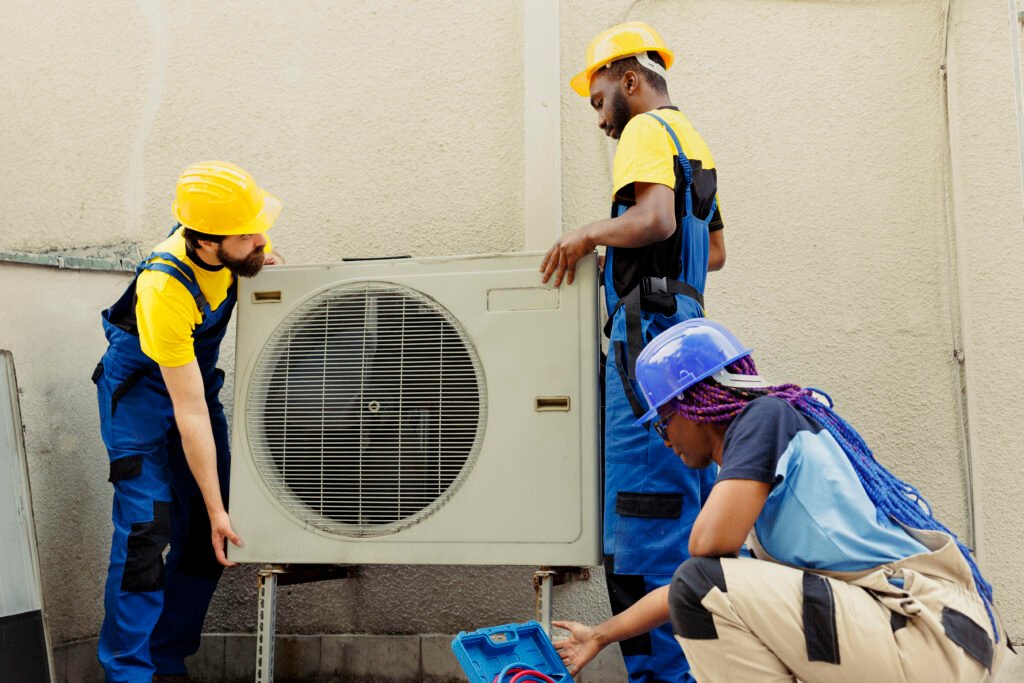
- Ask a technician. During any service visit, we can confirm your system size in seconds.
How Many Tons Does Your Home Need?

You may have heard rules of thumb such as one ton for every 500 or 600 square feet. In hot North Texas summers, many homes do need a little more capacity than that, but square footage alone is not reliable. The right size also depends on insulation, window size and direction, ceiling height, shade, ductwork and how many people live in the home.
Professionals use a room-by-room load calculation called Manual J to size a system correctly. Getting it right matters:
- Too big: the AC cools quickly and shuts off before removing humidity, leaving rooms cold and clammy. Frequent starts also wear parts out faster and raise bills.
- Too small: the AC runs nonstop on 100-degree afternoons and still cannot keep up, which strains the compressor.
A system that short cycles or runs constantly can fail when you need it most. If that happens, see Is AC Not Working an Emergency? for guidance on what to do next.
When Knowing Your Tonnage Helps
- Replacing your system: do not assume the new unit should match the old size. Many older homes were oversized from the start, and upgrades like new windows or better insulation can change what you need.
- Comparing quotes: make sure every contractor is pricing the same capacity and efficiency.
- Troubleshooting: a mismatched indoor and outdoor unit can cause poor cooling and high bills. Our article on why your air conditioner won’t turn on covers other common problems.
- Adding space: a new room or garage conversion may be better served by a separate system than by stretching your existing one.
Get Your AC Sized Right
If your system is aging or never kept your home comfortable, a proper load calculation is the first step toward a better fit. HVAC Repair Burleson performs Manual J sizing on every AC replacement, and our AC tune-up keeps your current system running at its rated capacity. Call (817) 839-0304 for honest, written advice on the right size for your home.