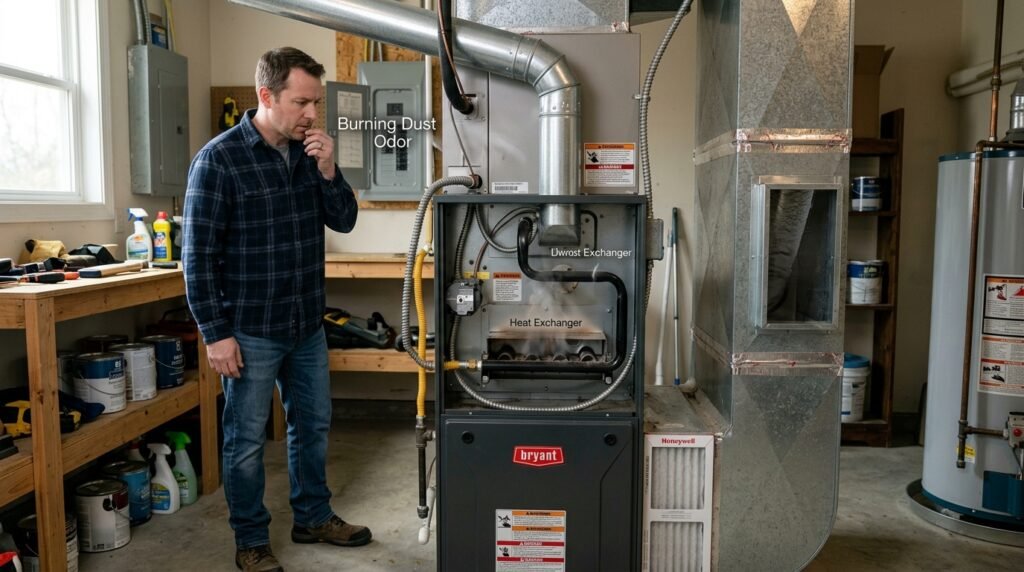
The first cold front of the season finally reaches Burleson, you switch the thermostat to Heat, and within minutes the house smells like something is burning. It is one of the most common calls we get every fall, and the good news is that most of the time it is harmless. Sometimes, though, a burning smell from your furnace is an early warning of an electrical or safety problem that should not wait. If you are not sure how your heating system is put together, our guide to air handlers vs furnaces is a helpful place to start.
Here is how to tell the difference, what each smell usually means, and exactly what to do next.
Is a Burning Smell from Your Furnace Normal?
A light, dusty burning smell the first few times you run the heat is normal. Through a long Burleson summer, your furnace can sit unused for six months or more while dust settles on the burners, the heat exchanger and, in electric systems, the heating elements. When those parts heat up again, the dust burns off and you smell it through the vents.
This “first-fire” smell should fade within an hour or two of running the system, or by the end of the first day at most. Opening a window and putting in a fresh air filter usually speeds things up. If the smell lingers, keeps coming back, or smells sharp, electrical or chemical rather than dusty, something else is going on.
7 Common Causes of a Burning Smell from a Furnace
1. Dust Burning Off After the Off-Season
This is the most common cause by far, and the only one that fixes itself. The smell is mild, dusty and short-lived. If you have a heat pump with electric backup heat strips, you may notice the same thing the first time the auxiliary heat kicks on during a cold snap.
2. A Clogged Air Filter
A filter packed with dust, pet hair and pollen chokes the airflow through your furnace. The blower motor works harder and runs hotter, the heat exchanger overheats, and the filter itself can start to scorch near hot surfaces. The result is a persistent dusty or hot smell. Check your filter first; in most Burleson homes it should be replaced every one to three months, more often with pets or during heavy pollen seasons.
3. An Overheating Blower Motor
The blower motor pushes warm air through your ducts. When its bearings wear out, its capacitor weakens, or it is clogged with dirt, it can overheat and give off a hot metal or burning-oil smell. You may also hear humming, squealing or grinding, or notice weak airflow. Left alone, an overheating motor can fail completely or trip the furnace’s safety limit switch, leaving you without heat on the coldest night of the year.
4. Electrical Problems
A smell like burning plastic or hot wires is the one to take most seriously. It can come from melting wire insulation, a failing control board, a loose connection that is arcing, or a shorting component. Turn the furnace off at the thermostat and at its power switch, and do not turn it back on until a licensed technician has inspected it. If you see smoke or flames, leave the house and call 911.
5. A Foreign Object in the Vents or Near the Furnace
Kids’ toys, plastic bags, paper and lint can fall into floor registers or get sucked toward the blower. Storage boxes, paint cans or laundry stacked too close to the furnace closet can also heat up. A sharp plastic or rubber smell that appears suddenly often has a simple cause like this. With the system off, check the registers nearest the smell and clear at least three feet of space around the furnace.
6. Burning Rubber from a Worn Belt
Older furnaces use a rubber belt to turn the blower. As the belt ages, cracks or slips, friction creates a burning-rubber smell, often with a squeal when the blower starts. A worn belt is an inexpensive part, but it should be replaced before it snaps.
7. A Cracked Heat Exchanger
The heat exchanger keeps the combustion gases from your gas burners separate from the air you breathe. Years of heating and cooling can cause it to crack. Some homeowners notice a sharp, chemical or formaldehyde-like odor, along with soot around the burners, an unusual yellow or flickering flame, or headaches and nausea in the household. A cracked heat exchanger can let carbon monoxide into your home, and carbon monoxide itself has no smell, so a working CO detector is essential. Our article on carbon monoxide and your HVAC system explains the warning signs in more detail.
What Different Furnace Smells Usually Mean
- Dusty burning smell: Dust burning off at the start of the season. Normal if it fades within a few hours.
- Burning plastic or hot wires: Electrical problem or a foreign object. Shut the system off and call a technician.
- Burning rubber: Worn blower belt, or rubber debris near a hot surface.
- Hot metal or oil: Overheating blower motor or worn bearings.
- Sharp chemical or formaldehyde smell: Possible cracked heat exchanger. Turn the furnace off and have it inspected.
- Rotten eggs or sulfur: This is not a burning smell. It is the odorant added to natural gas and can mean a gas leak.
What to Do If You Smell Gas
Most Burleson homes heat with natural gas. If you smell rotten eggs, do not switch lights or appliances on or off, do not use your phone inside, and do not try to find the leak. Get everyone outside right away, then call 911 or Atmos Energy’s 24-hour emergency line at 866-322-8667 from a safe distance. Once the gas utility has made the home safe, a licensed HVAC technician can repair the furnace or gas connection.
What to Do About a Burning Smell: Step by Step
- Judge the smell. Mild and dusty at the start of the season? Let the system run with a window cracked for an hour or two.
- Check the air filter and replace it if it is gray or clogged.
- Look around the furnace and registers for anything stored too close or fallen into a vent.
- Shut the system off if the smell is electrical, plastic, rubber or chemical, if it keeps getting stronger, or if it does not fade after a day.
- Test your carbon monoxide detectors and replace the batteries if needed.
- Call a licensed HVAC technician for any smell that is not simple dust burning off.
Not sure whether your situation counts as an emergency? Our guide on when an HVAC problem is an emergency walks through how to decide, and the same rules apply to heating. If you use space heaters while you wait, read how convection heaters work so you can use them safely.
How to Prevent Furnace Burning Smells
The easiest way to avoid surprises is a fall furnace tune-up before Burleson’s first cold front, usually in October or early November. During a tune-up, a technician cleans the burners and blower, tests the motor and capacitor, tightens electrical connections, inspects the heat exchanger, checks the flame and tests for carbon monoxide. Many of the problems behind a burning smell are caught long before they become noticeable. One more tip: when you switch from cooling to heating, give the system a quick test on a mild day first, and remember that heating and cooling share parts, which is why an AC can act up after the furnace has been worked on, as we explain in why your AC won’t turn on after heater service.
Need Help with a Burning Smell from Your Furnace?
If the smell is not fading, or it smells electrical, rubbery or chemical, turn the furnace off and let a professional take a look. HVAC Repair Burleson provides fast, licensed furnace repair in Burleson. Call (817) 839-0304 or request service online, and we will make sure your heat is safe and running right.